Havia uma receita. Minha mãe a amava desde a infância — aquele sabor que não vem só dos ingredientes, mas da mão que prepara, da voz que conta, do cheiro que fica na memória muito depois que o prato esfria. Ela pertencia aos meus avós. E quando eles partiram, a receita foi com eles.
Nenhum familiar havia anotado. Ninguém tinha perguntado a tempo.
Essa dor silenciosa — de querer buscar algo numa prateleira que não existe mais — foi o semente de tudo. Foi dela que nasceu o Tecendo Histórias, Sabores e Memórias em Família.
O que se perde quando os mais velhos partem sem ser ouvidos
Você já olhou para uma pessoa idosa na sua família e pensou: “Preciso perguntar isso a ela” — mas foi deixando para amanhã?
Esse amanhã, às vezes, não chega.
Não é só uma receita que se perde. É uma forma de temperar. É o nome de uma técnica aprendida na infância. É a história de como a família chegou até aqui. É a memória afetiva que costura gerações.
Chamo isso de Amnésia Geracional — o apagamento silencioso que acontece quando o saber dos anciãos vai embora sem ser registrado. Não por descuido, mas por falta de método. Por não saber como perguntar. Por não perceber que aquele momento cotidiano era, na verdade, um tesouro.
Da dor à metodologia — como nasceu o Tecendo Histórias
A perda da receita da minha mãe não ficou só como mágoa. Ela se transformou em pergunta: e se houvesse uma forma de ensinar as famílias a fazer esse resgate antes que fosse tarde?
Foi a partir daí que desenvolvi o projeto Tecendo Histórias, Sabores e Memórias em Família — uma metodologia original de resgate do patrimônio imaterial afetivo, que capacita filhos e netos a atuarem como verdadeiros Guardiões da Memória dentro da própria família.
O projeto não é apenas sobre receitas. É sobre:
Escuta ativa e entrevista afetiva Aprender a fazer as perguntas certas — as que destravam lembranças, que fazem o ancião voltar para dentro de si e trazer de lá aquilo que ninguém mais sabe.
Do oral ao escrito — transformar fala em legado Uma receita “de olhômetro” tem uma linguagem própria. Uma história contada em voz baixa carrega ritmo, cheiro, textura. O método ensina a preservar essa voz original enquanto a transforma em texto literário — para que ela possa durar.
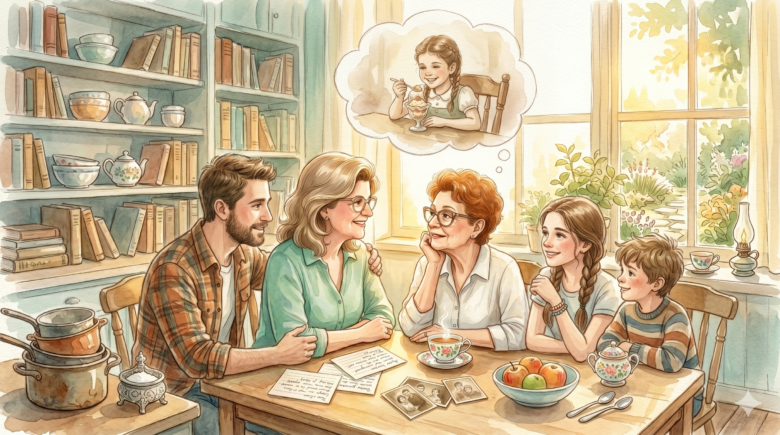
Registro audiovisual com o que você tem Não é preciso equipamento profissional. Um celular bem posicionado, luz de janela e escuta verdadeira já são suficientes para guardar o rosto e a voz de quem você ama.
A publicação como ato de amor Ao final do processo, cada família tem em mãos um material real — histórias e receitas organizadas, prontas para virar um e-book, um livro impresso, um presente de Natal que nenhuma loja vende.
Por que isso importa agora — e não depois
Existe uma urgência que a vida cotidiana nos faz esquecer. Os anciãos envelhecem. Os anos passam. E a janela para ouvir, para perguntar, para sentar do lado e gravar vai se fechando — às vezes devagar, às vezes de uma vez.
O que não é escrito, se perde. O que não é gravado, se esvai. O que não é perguntado a tempo, se transforma em saudade sem forma — como uma receita que você sabe que existiu, mas não consegue mais reproduzir.
O Tecendo Histórias, Sabores e Memórias em Família existe para que nenhuma família precise passar pela dor que a minha passou.
Como participar
O projeto acontece em formato online, com encontros ao vivo, atividades práticas em família e mentoria acompanhada. Ao longo da jornada, você aprende a entrevistar, registrar, escrever e publicar — e sai com um legado real nas mãos.
Se você sente que há um livro guardado dentro da sua família — e que o tempo está passando —, este projeto é para você.
Acesse [verbalizing8.com] e saiba como participar da próxima turma do Tecendo Histórias, Sabores e Memórias em Família.
Porque toda família tem uma receita que merece ser lembrada. E toda história merece ser contada antes que o silêncio chegue.
— Cris Breves
🇺🇸 ENGLISH
Title: The Recipe That Was Lost — and the Project Born from Longing
There was a recipe. My mother had loved it since childhood — that kind of flavor that doesn’t come from ingredients alone, but from the hands that prepare it, the voice that tells the story, the scent that lingers in memory long after the plate has cooled. It belonged to my grandparents. And when they passed away, the recipe went with them.
No one in the family had written it down. No one had asked in time.
That quiet grief — of reaching for something on a shelf that no longer exists — was the seed of everything. It gave birth to Weaving Stories, Flavors and Memories as a Family.
What is lost when elders leave without being heard
Have you ever looked at an elderly family member and thought, “I need to ask them about that” — and kept putting it off until tomorrow?
Sometimes tomorrow doesn’t come.
It’s not just a recipe that’s lost. It’s a way of seasoning. A technique learned in childhood. The story of how your family got here. The emotional memory that stitches generations together.
I call this Generational Amnesia — the silent erasure that happens when the wisdom of elders disappears without being recorded. Not from carelessness, but from the lack of a method. From not knowing how to ask. From not realizing that an ordinary moment was, in fact, a treasure.
From grief to methodology — how Weaving Stories was born
The loss of my mother’s recipe didn’t stay as a wound. It became a question: what if there were a way to teach families to do this recovery before it was too late?
That’s how I developed the project Weaving Stories, Flavors and Memories as a Family — an original methodology for rescuing affective intangible heritage, which equips children and grandchildren to become true Memory Guardians within their own families.
The project is not just about recipes. It’s about:
Active listening and affective interviewing Learning to ask the right questions — the ones that unlock memories, that bring an elder back to a place inside themselves and surface what no one else holds.
From spoken to written — turning words into legacy A recipe made “by feel” has its own language. A story told in a low voice carries rhythm, scent, texture. The method teaches how to preserve that original voice while shaping it into literary text — so it can last.
Audiovisual recording with what you already have No professional equipment needed. A well-positioned phone, window light and genuine presence are enough to preserve the face and voice of someone you love.
Publication as an act of love At the end of the process, each family holds something real — organized stories and recipes, ready to become an e-book, a printed book, a Christmas gift no store can sell.
Why this matters now — not later
There is an urgency that everyday life makes us forget. Elders grow older. Years pass. The window to listen, to ask, to sit beside someone and record them is closing — sometimes slowly, sometimes all at once.
What is not written, is lost. What is not recorded, fades away. What is not asked in time becomes a grief without shape — like a recipe you know once existed, but can no longer recreate.
Weaving Stories, Flavors and Memories as a Family exists so that no family has to go through the pain mine did.
How to participate
The project takes place online, with live sessions, hands-on family activities and guided mentorship. Throughout the journey, you learn to interview, record, write and publish — and you walk away with a real legacy in your hands.
If you feel there is a book tucked inside your family — and that time is passing —, this project is for you.
Visit [verbalizing8.com] and find out how to join the next edition of Weaving Stories, Flavors and Memories as a Family.
Because every family has a recipe worth remembering. And every story deserves to be told before the silence comes.
— Cris Breves